How Much Can a Student Earn in Germany? (Part-Time Jobs, Salary & Living Cost)
Studying in Germany is attractive for its high‑quality education and low tuition fees at public universities. However, many students wonder whether a part‑time job can cover daily expenses. This guide breaks down legal work permissions, typical wages, popular student jobs, and a realistic view of the German cost of living.
Why Students Work in Germany
Working while studying offers several benefits:
- Supplementary income for rent, food, and transport
- Practical experience that strengthens your CV
- Networking opportunities with local employers
- Improved language skills and cultural integration
Legal Permission for Students
International students holding a valid German residence permit are allowed to work. The permit automatically includes a work‑allowance; no separate work visa is required as long as you stay within the prescribed hours.
How Many Hours Can Students Work?
The German regulations distinguish between full‑day and half‑day work:
- Up to 120 full days (8‑hour days) per year
- Or up to 240 half days (4‑hour days) per year
In practice, most students work between 10 and 20 hours per week to stay within the limit.
Average Student Salary in Germany
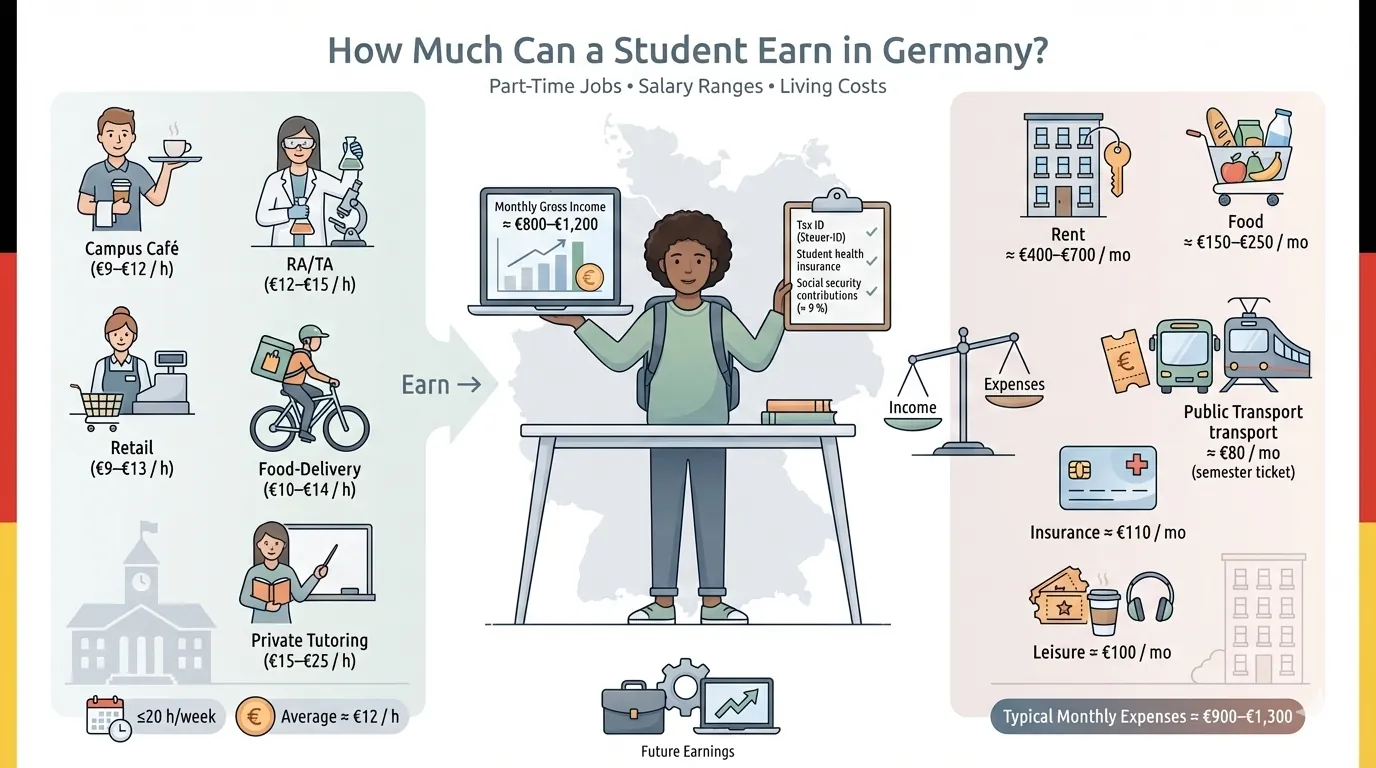
The statutory minimum wage is €12.00 per hour (as of 2024). Most student positions pay between €12 and €15 per hour, depending on the sector and location.
Top Student Jobs
- Working student (Werkstudent) – positions within companies that align with your field of study
- Part‑time roles in restaurants, cafés, or bars
- University assistant or research assistant
- Warehouse and logistics support
- IT support, programming, or help‑desk jobs
Monthly Earnings Example
| Hours per week | Hourly rate | Monthly gross (approx.) |
|---|---|---|
| 10 hrs | €12–15 | €480–600 |
| 20 hrs | €12–15 | €960–1,200 |
Cost of Living vs. Salary
Typical monthly expenses for a student in a German city:
- Rent (shared flat, WG): €350–€550
- Food & groceries: €150–€250
- Health insurance: €110–€120
- Public transport pass: €60–€100
- Miscellaneous (phone, study materials, leisure): €100–€150
Total: roughly €770–€1,170 per month.
Can You Survive Only on a Part‑Time Job?
The honest answer: it depends on the city and your lifestyle. In smaller towns, a 10‑hour week may cover basic needs, while in larger cities like Munich or Frankfurt, you’ll likely need 15–20 hours weekly or additional scholarships to stay comfortable.
Taxes & Deductions
- Tax‑free limit: The first €10,347 (2024) of annual income is tax‑free for students.
- Social contributions: If you earn less than €520 per month, you are exempt from most contributions.
- Above the threshold, you’ll pay a small percentage for pension and unemployment insurance.
Final Advice for Students
- Start looking for a job early – university career services and online job portals are valuable resources.
- Prioritize positions related to your field of study; they boost both earnings and professional growth.
- Avoid exceeding the 120‑day limit to keep your residence permit secure.
- Consider combining a part‑time job with a scholarship or student loan for a more comfortable budget.
Need Personalized Guidance?
DeutschlandGenics helps you shortlist the right programs, prepare strong SOPs, and plan applications strategically for German public universities.