TU9 Universities in Germany: How They Compare to Other Public Universities
Germany’s public university system is renowned for high-quality, tuition‑free education. Among the many institutions, the TU9 alliance stands out as a group of nine leading technical universities that focus on engineering, natural sciences, and technology. Understanding the TU9’s strengths and how they differ from other public universities can help international students make an informed choice.
What Is the TU9 Alliance?
Founded in 2006, the TU9 is a collective of Germany’s most research‑intensive technical universities. The alliance promotes collaboration, joint research projects, and shared resources, providing students with access to cutting‑edge labs, industry partnerships, and a strong alumni network.
Members of the TU9 Alliance
- Technical University of Munich (TUM)
- RWTH Aachen University
- Technical University of Berlin (TU Berlin)
- Technical University of Darmstadt (TU Darmstadt)
- Technical University of Dresden (TU Dresden)
- Karlsruhe Institute of Technology (KIT)
- Technical University of Hamburg (TUHH)
- University of Stuttgart
- Technical University of Braunschweig (TU Braunschweig)
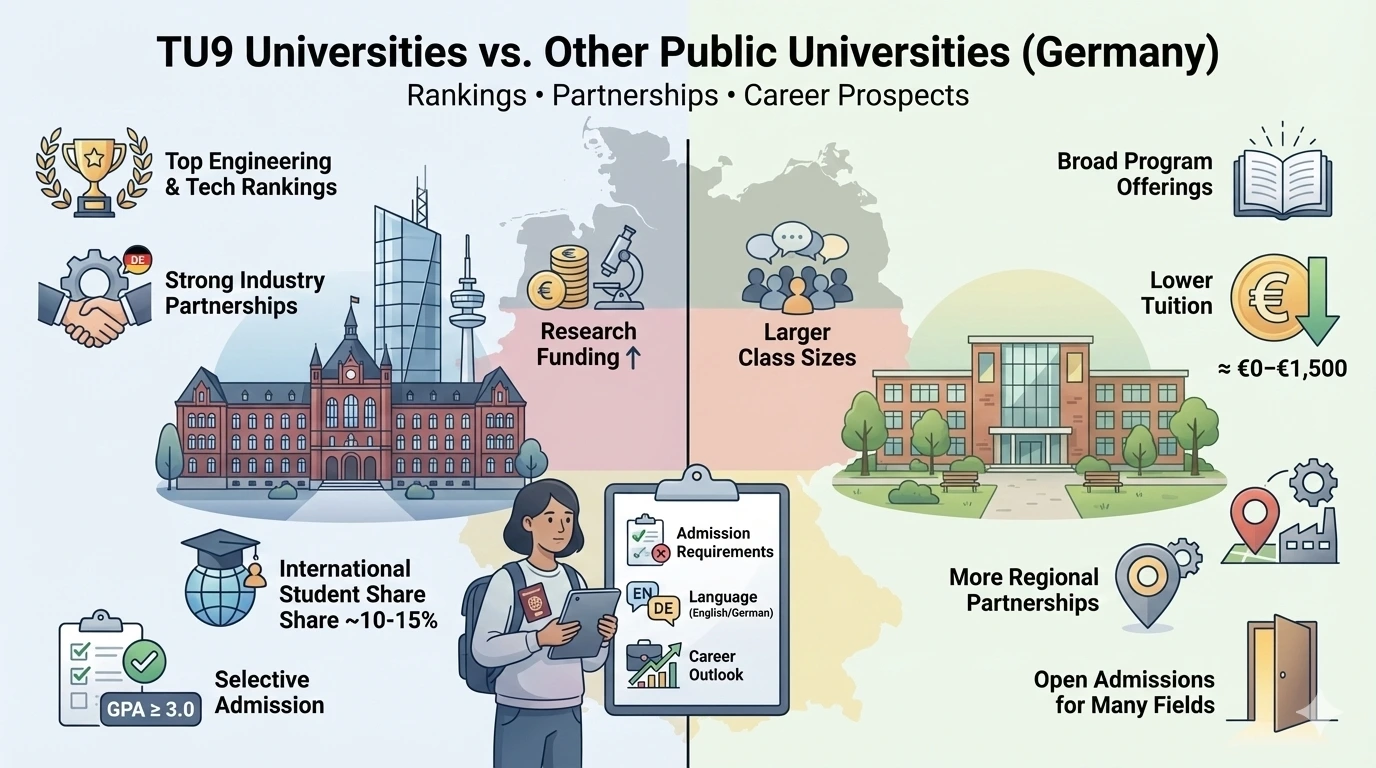
Comparison: TU9 vs. Other Public Universities
| Aspect | TU9 Universities | Other Public Universities |
|---|---|---|
| Research Funding (per year) | €1.5 billion + (highly research‑intensive) | €0.5–1.0 billion |
| International Student Ratio | ≈ 20 % | ≈ 12 % |
| Industry Partnerships | Extensive (automotive, aerospace, ICT) | Moderate to strong (regional focus) |
| Average Class Size (Bachelor) | 30–45 students | 40–70 students |
| Employment Rate (6 months after graduation) | ≈ 95 % | ≈ 85 % |
| Typical Tuition (semester) | €0 – €150 (administrative fee) | €0 – €150 (administrative fee) |
Career Scope and Job Opportunities
Graduates from TU9 universities benefit from strong industry connections, especially in automotive engineering, renewable energy, information technology, and manufacturing. Companies such as BMW, Siemens, Bosch, and SAP actively recruit TU9 alumni, often offering higher starting salaries and accelerated career tracks. Even non‑TU9 public university graduates enjoy solid employment prospects, but TU9 alumni typically have a wider network of multinational employers and more opportunities for research‑oriented positions.
Key sectors hiring international graduates include:
- Automotive and Mobility
- Mechanical and Electrical Engineering
- Computer Science and Data Analytics
- Renewable Energy and Environmental Technology
- Pharmaceuticals and Biotechnology
Final Thoughts
Both TU9 and other German public universities provide world‑class education with minimal tuition costs. TU9 universities stand out for their research intensity, industry ties, and higher post‑graduation employment rates, making them an attractive option for students aiming for top‑tier technical careers. However, many non‑TU9 public universities also deliver excellent programs, especially for students seeking a broader range of disciplines or a more regional campus experience.
Need Personalized Guidance?
DeutschlandGenics helps students shortlist the right programs, prepare strong SOPs, and plan applications strategically for German public universities.