Public vs Private Universities for Master's in Germany
Germany is renowned for its high-quality higher education system, but international students often wonder whether a public or a private university is the better choice for a master’s degree. This article breaks down the key differences, focusing on why public universities are a strong option and how each path influences career prospects.
Why Public Universities Are Popular Among International Students
- Low Tuition Fees: Most public institutions charge little or no tuition for master’s programs, even for non-EU students.
- Research Excellence: Public universities often rank higher in global university rankings and receive strong government research funding.
- Diverse Student Body: Large international communities provide exposure to multicultural academic and professional environments.
- Global Recognition: Degrees from public universities are widely recognized by employers in Germany and internationally.
Examples of Public Universities in Germany (Master’s Programs)
Germany has more than 100 public universities offering English-taught and German-taught master’s programs across engineering, science, management, and technology. Some well-known public universities include:
- Technical University of Munich (TUM) – Engineering, Management & Technology, Data Engineering
- RWTH Aachen University – Mechanical Engineering, Electrical Engineering, Automotive Systems
- Karlsruhe Institute of Technology (KIT) – Industrial Engineering, Computer Science, Energy Engineering
- University of Stuttgart – Production Systems, Automotive Engineering, Simulation Technology
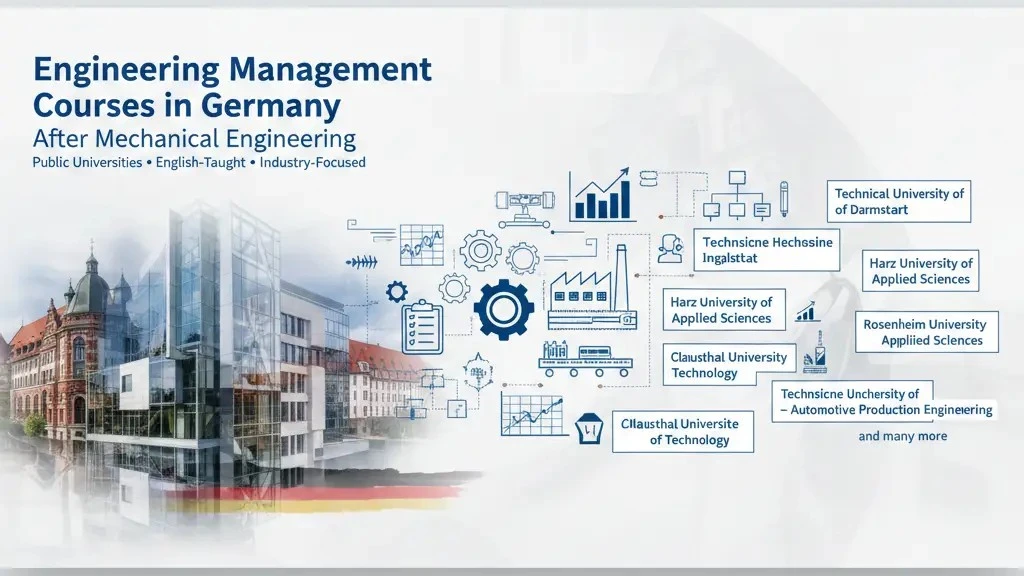
- Technische Universität Darmstadt – Logistics, Information Systems, Electrical Engineering
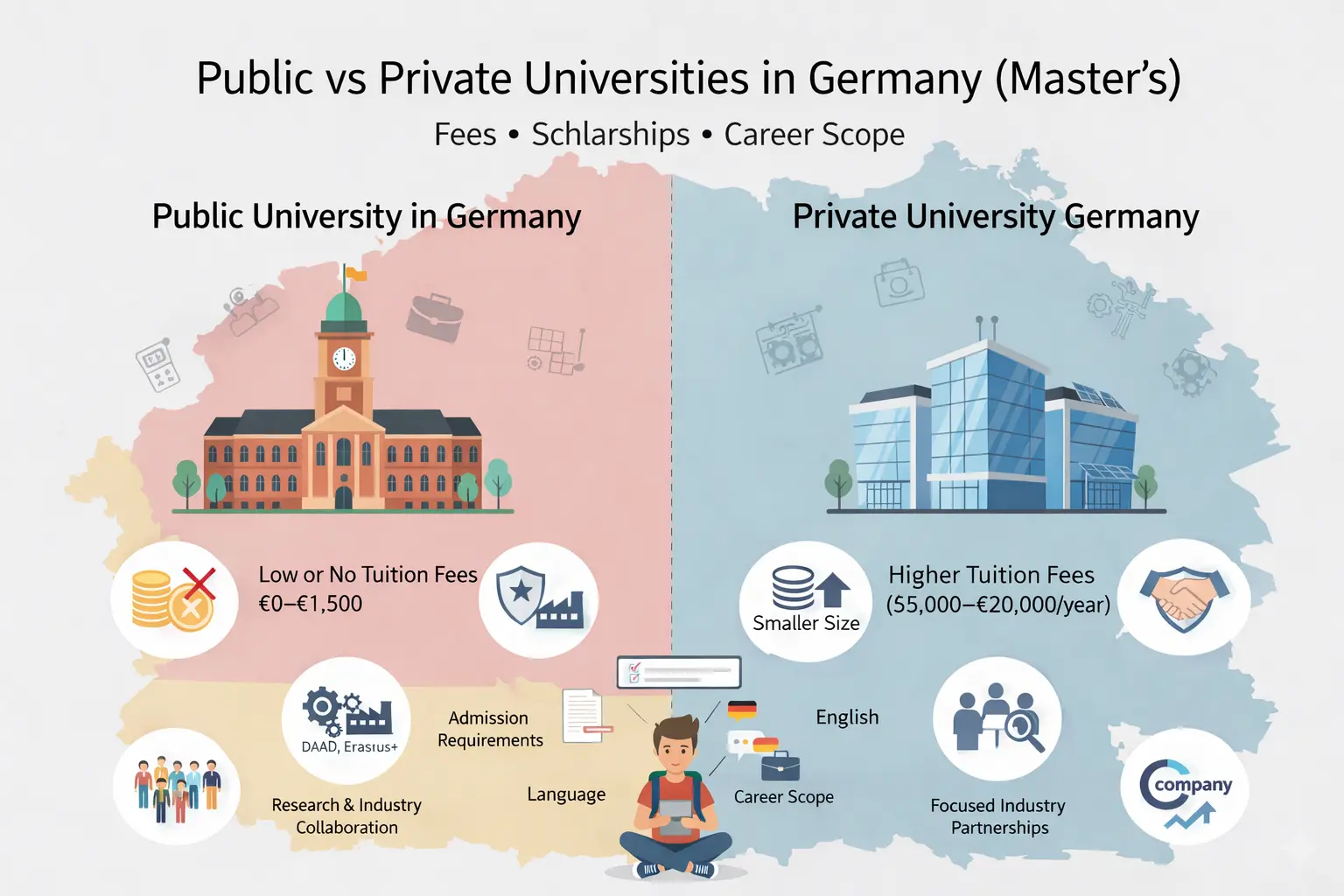
Most public universities charge only a semester contribution of €150–€350, which usually includes administrative fees and a public transport ticket.
Cost Comparison: Public vs Private Universities
Private universities typically charge between €5,000 and €20,000 per semester, depending on the program and institution. Public universities, by contrast, remain highly affordable due to government funding. While private universities may offer smaller class sizes and structured study plans, the overall financial difference is significant for most students.
Examples of Private Universities in Berlin (Approximate Fees)
Berlin hosts several well-known private universities offering English-taught master’s programs, particularly in business, management, IT, and creative fields. Below are examples of private universities in Berlin with approximate tuition fees:
- IU International University of Applied Sciences (Berlin campus) – €6,000–€7,500 per year
- Berlin School of Business and Innovation (BSBI) – €8,000–€11,000 per year
- SRH Berlin University of Applied Sciences – €10,000–€14,000 per year
- ESMT Berlin (Management-focused programs) – €15,000–€30,000 total (program dependent)
- GISMA Business School (Berlin campus) – €9,000–€18,000 total (program dependent)
Tuition fees at private universities vary widely based on program duration, specialization, and scholarships. Students should carefully review accreditation status and long-term return on investment.
Quality and Accreditation
Both public and private universities in Germany must meet accreditation standards set by the German Accreditation Council. Public universities benefit from long-established academic reputations and close cooperation with research institutes such as Fraunhofer, Max Planck, and Helmholtz. These partnerships often improve internship, thesis, and employment opportunities.
Career Scope and Job Opportunities in Germany
A master’s degree from a German university, especially a public one, opens doors to a strong job market. International graduates benefit from Germany’s 18-month post-study job-seeking residence permit. Key sectors hiring master’s graduates include:
- Engineering and Automotive
- Information Technology and Software Development
- Renewable Energy and Sustainability
- Business Analytics and Finance
- Healthcare and Biotechnology
Public universities often maintain strong regional industry connections, supporting internships, working student roles (Werkstudent), and applied master’s theses. Private universities may also offer career services, but public universities typically provide broader alumni networks and employer recognition.
Private University Considerations
Private universities can be suitable for students seeking specific curricula, flexible intakes, or structured programs with smaller class sizes. However, higher tuition fees should be carefully evaluated against career outcomes, employer recognition, and long-term financial planning.
Final Thoughts
For most international students, public universities in Germany offer the best balance of affordability, academic quality, and career opportunities. While private universities may suit certain profiles, public institutions remain the preferred choice for students aiming for strong employment prospects in Germany with minimal financial burden.
Need Personalized Guidance?
DeutschlandGenics helps students compare public and private universities, shortlist suitable programs, prepare strong applications, and plan careers in Germany.